I recently took part in the XI International Congress of Power Engineers, held as part of the “5E” business forum in Kyiv. Together with colleagues from the energy sector, government officials, financial institutions and international partners, we discussed a strategic question: what should the future architecture of Ukraine’s energy system look like?
War, Ceasefire, Peace?! Three Scenarios and a New Architecture for Ukraine’s Energy Security
3 min read
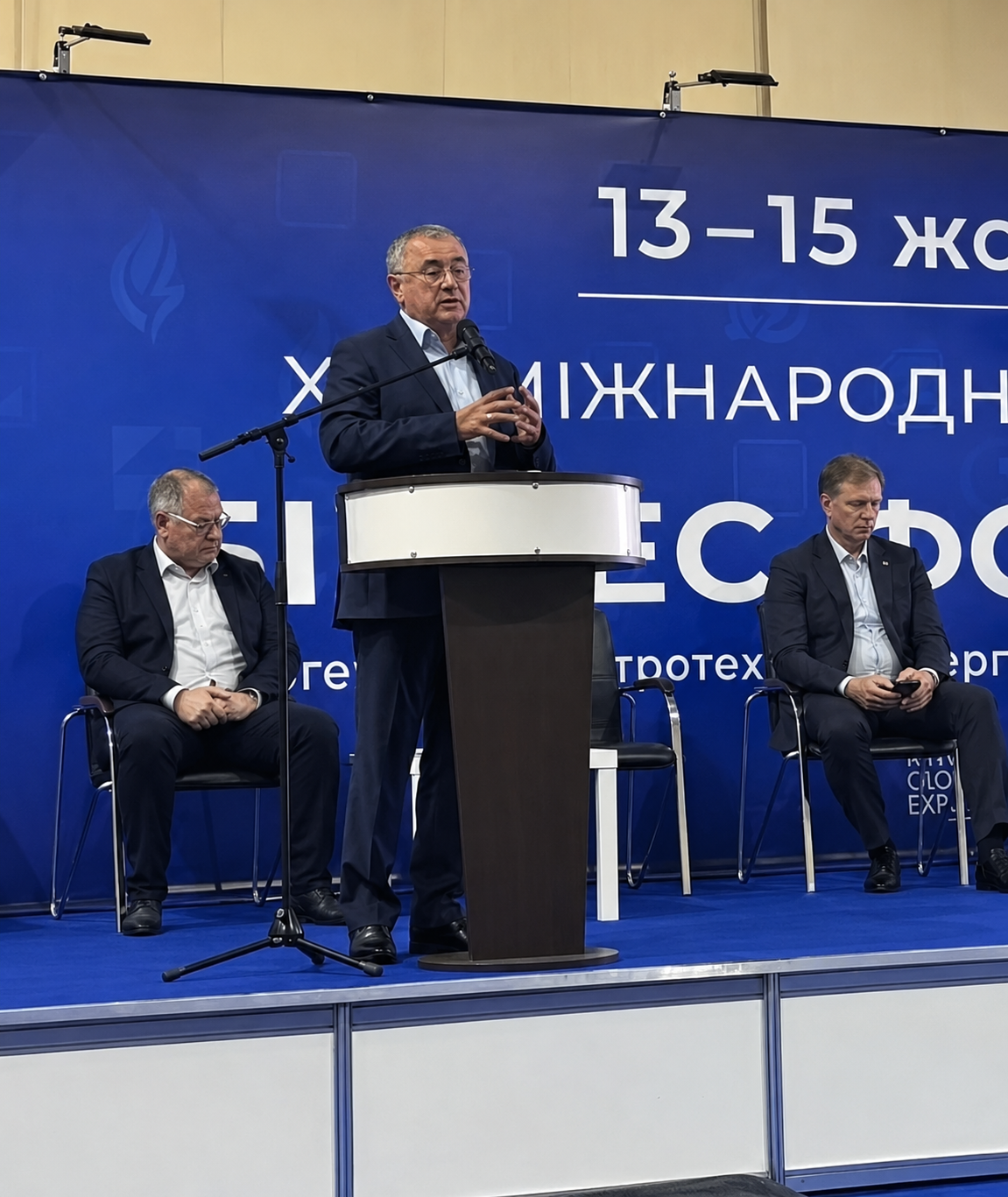
In my presentation, “War, Ceasefire, Peace?! Strategic Models of Ukraine’s Energy Security,” I proposed assessing our development through the lens of three possible scenarios: continued war, a fragile ceasefire and lasting peace. Each of them requires its own design logic and priorities.
The main lesson this war has taught us: energy security is no longer defined solely by the cost of a kilowatt-hour. It is defined by the architecture of the system.
Physical protection, geographic distribution, autonomy and the ability to recover quickly after strikes — these are the fundamental criteria of resilience today.
Energy security is defined not by the cost of a kilowatt-hour, but by the architecture of the system.
Three Scenarios — Three Models of Resilience
- War scenario: Defense & Islanding. The priority is survival and maximum local resilience: island microgrids, autonomy for communities and critical facilities, mobile generation and battery energy storage systems (BESS) next to hospitals, water utilities and basic infrastructure.
- Fragile ceasefire scenario: Protected Decentralization. The focus shifts to protected distributed generation, Smart Grid clusters, fast-response industrial storage, and municipal and agro-industrial cogeneration.
- Lasting peace scenario: Integration & Net-Zero. Full integration with ENTSO-E, highly liquid digital balancing markets, scaling up solar and wind farms, corporate PPAs and realizing the potential for “green” energy exports to the EU.
Why Can’t We Rebuild “As It Was”?
Attempting to mechanically restore the old, overly centralized Soviet model would be a strategic mistake. Concentrating gigawatts of capacity in a few giant plants and transmission hubs makes the country hostage to pinpoint missile strikes, even after the war.
Reconstruction must happen exclusively through modernization: decentralization, digitalization, market mechanisms and modern engineering solutions.
Bioenergy — the Natural Foundation of Decentralization
Biogas and biomethane hold a special place in the new system:
- During the war, biogas plants can power local energy islands around the clock using local agricultural biomass, independent of sun, wind or imported fuel.
- During a ceasefire, they can deliver stable output and help balance gas distribution networks.
- In peacetime, they can build substantial export potential for biomethane and “green” hydrogen for the European market.
The Challenge of a Fragile Ceasefire
I want to stress one point in particular: a possible ceasefire may turn out to be the most difficult stage for the sector. Non-repayable donor grants will begin to shrink, while conventional private capital will remain wary of high military and political risks.
Only effective international risk-insurance instruments, direct engagement with IFIs and joint projects with European operators can bridge this investment gap.
Today Ukraine is gaining unprecedented experience: while Western Europe is moving to decentralized generation primarily for climate goals, we are doing it for physical survival.
This experience of resilience and flexibility will inevitably become the foundation of Europe’s renewed energy security.
Read Also
“Person of the Year”: From Recognition to Responsibility
On 31 October 2026, at the National Opera of Ukraine, ...
Read more
Energy Storage Systems (BESS): Our 2025 Experience.
2025 became the year our team launched industrial energy storage ...
Read more